


Infertility treatment without IVF
Infertility is not only a medical diagnosis, but rather a problem that can affect many aspects of a person’s life, such as their health, both mental and physical, and family relationships. Infertility is considered a marriage in which, for one reason or another, pregnancy does not occur within 12 months with regular sexual life without the use of any methods of contraception.
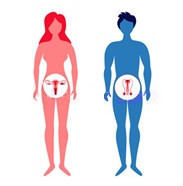
In recent years, the topic of infertility is particularly frequent. This is not only due to an increase in the number of couples who have difficulty conceiving naturally. The possibilities of modern medicine have significantly expanded. From now on, it offers various solutions to this problem. In addition, people who want to have children, but are experiencing difficulties in achieving the goal, now take a more active position and, without delay, seek help from specialists-doctors-reproductologists.
Infertility can be caused by problems of one of the spouses, or a combination of male and female problems. To identify the cause of infertility, it is necessary to examine not only women, but also men.
At the first appointment, the doctor will find out the medical history (anamnesis): whether there were pregnancies, how they ended, whether infertility was treated and what methods, whether there are violations of the menstrual cycle. During the examination, a gynecological examination and ultrasound examination of the pelvic organs is necessary. You will also need to pass blood hormones (FSH, LH, estradiol, PRL, DGA, T, TSH), check for ovulation. In terms of examination, it is necessary to check the infectious status, since bacterial and viral infection reduces the likelihood of pregnancy.
Thus, it takes 2-3 months to determine the cause of infertility.
Among the methods of infertility treatment, we can conditionally distinguish those that are aimed at restoring the couple’s ability to conceive naturally, and those that use artificial insemination techniques, or so-called assisted reproductive technologies. The first include the treatment of chronic inflammation of the uterus appendages, surgical and non-surgical restoration of patency of the fallopian tubes, correction of endocrine disorders and impaired spermatogenesis. To the second — intrauterine insemination with the sperm of the husband or donor and assisted reproductive technologies. IVF is the last stage of infertility treatment. Although sometimes it is the only option – with absolute indications.
Let’s present the main directions of infertility treatment without IVF
Tubal factor of infertility
Treatment methods for tubal infertility can be divided into 2 groups
-
Anti-inflammatory therapy with the possible use of physiotherapy methods (if the diagnosis revealed an inflammatory process). It is advisable to do this if there is an acute inflammatory process at the moment.
-
Laparoscopic operation. During the surgery the doctor has the ability to immediately remove adhesions, fibroids, endometriosis sites etc., restoring the normal patency of the fallopian tubes.
The second, opposite approach is the fear of hormonal treatment, the belief that all hormones are harmful, lead to excessive obesity and hair loss, followed by the transformation of a woman into a man. The extreme position is ” better death than hormones!”.
This completely erroneous idea of the effect of hormonal drugs was born because of a purely mechanical transfer to hormonal agents used in gynecology, the everyday idea of the side effects of completely different hormonal drugs used for other, non-gynecological, diseases.
This position, even in cases where the doctor manages to persuade the patient to take drugs, condemns the treatment to failure, since psychological resistance, the expectation of nightmarish consequences are a powerful brake on the therapeutic effect.
It is important to know that hormone medications taken according to indications are not only not harmful and do not cause cosmetic defects, but on the contrary — they are extremely effective and help to improve the appearance of a woman.
From all the above, it is clear that the main condition for the favorable and effective action of hormonal drugs is their prescription by a qualified doctor.
In some types of infertility to achieve a positive result – pregnancy, enough gramotic prescribed hormone therapy.
Anti-inflammatory treatment
A few words should be said about anti-inflammatory treatment. As a rule, tubal-peritoneal infertility is the result of a chronic inflammatory process in the pelvis, which occurred as a result of a banal or specific (gonorrhea, tuberculosis) infection, often as a complication of abortion.
Since the adhesive process already exists, attempts to fight it, alas, are not very promising. However, often chronic inflammation occurs against the background of preserved passage of the fallopian tubes, and sometimes minimal anti-inflammatory treatment can lead to pregnancy. A standard smear sufficiently reflects the severity of the inflammatory process and should be made to each patient.
Most often, anti-inflammatory treatment is not a treatment for infertility, but it is necessary in all cases when a woman is going to have intrauterine interventions, therapeutic or diagnostic: a picture of the uterus and tubes, laparoscopy with the introduction of a dye into the uterus, intrauterine insemination, IVF, etc. Treatment has to be carried out by both partners.
Sometimes a woman just needs a well-chosen diet and medications that reduce weight. After normalization of the endocrine system functioning, ovulation, reproductive function is restored and a long-awaited pregnancy occurs.
In our clinic, with the help of Israeli specialists who have many years of experience in the field of reproduction, you will pass the necessary examinations to identify the cause of infertility and will develop individual schemes for each couple. Based on this, we will choose the most effective method and the shortest way to overcome infertility and make Your dream come true.